

What do Warp Material Feeding and Lean Management have in common? Quite a lot.
In machines where warp material is continuously fed and processed, constant and defined material tension is essential for a stable production process. If there is no controlled warp material feeding system or active tension control, the operator has to regularly monitor the process and make manual adjustments when necessary.
The process can be monitored, for example, using a handheld measuring device or by observing changes in the material being produced. Depending on the application, deviations may become apparent through changes in width, altered elongation behaviour or other quality characteristics.
Where does Muda occur?
From a Lean Management perspective, recurring inspection and adjustment activities are a classic example of avoidable effort – so-called “Muda” (waste).
The operator has to monitor the process, carry out measurements and make adjustments where necessary. These activities do not directly add value to the product. At the same time, frequent manual interventions can encourage process fluctuations and therefore affect the reproducibility of quality.
This is exactly where automation comes in.
Muda is a Japanese word meaning waste, futility, or uselessness, and it describes any activity that consumes resources without adding value for the customer. > Wikipedia
The solution: automatic control instead of manual correction
By automatically measuring and controlling warp yarn tension, the process can be continuously monitored. The warp feeding system can independently respond to changing conditions and adjust the material feed accordingly.
This can significantly reduce manual inspections and subsequent adjustments and creates several benefits:
- More consistent warp yarn tension
- More stable and reproducible fabric quality
- Fewer operator interventions
- Greater process reliability
- Reduced workload for employees performing recurring inspection tasks
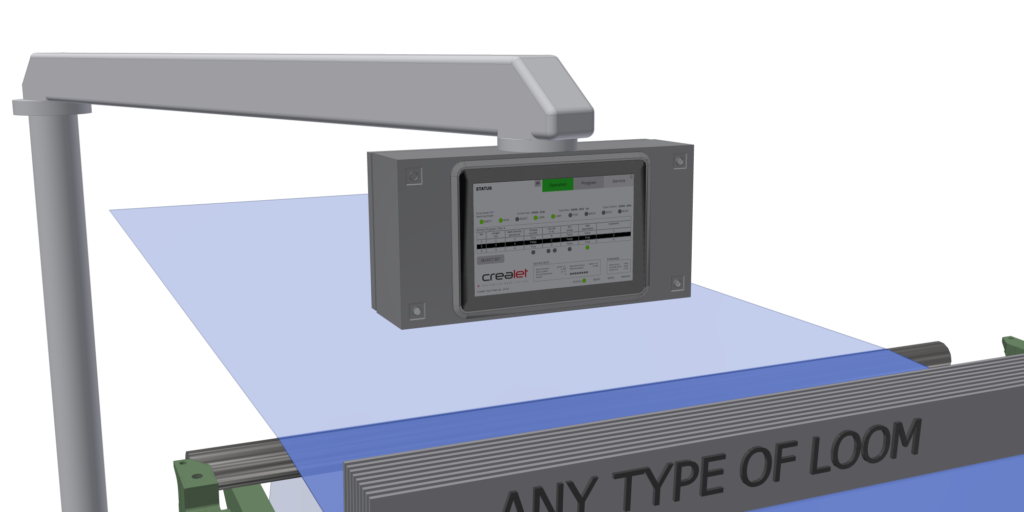
The time gained can be used for activities that actually create value.
Automation of warp yarn feeding is therefore more than a technical optimisation. It is a concrete step towards Lean Production: reducing waste, stabilising processes and making quality reproducible.
Less Muda. Fewer manual interventions. Greater stability. Greater efficiency.
From automation to digital process optimisation
Automated warp yarn feeding can be implemented using various technical concepts – from frequency-controlled motors to modern BLDC motors (Brushless DC).
Different measurement and control concepts are also available for monitoring warp yarn tension.
Selecting the right drive and suitable sensor technology is important. Even more important, however, is the higher-level control of the system.
A modern solution should not only control warp yarn tension reliably, but also capture, store and make relevant process data available for further applications.
For example, information on warp yarn tension, process progression, quality characteristics, machine operating times, downtimes and process deviations can be continuously recorded and analysed.
This creates a valuable data foundation for quality monitoring, process analysis, optimisation of production processes and predictive maintenance.
Connecting data – understanding processes holistically
Ideally, the data collected is transferred via suitable interfaces to higher-level systems such as LoomData or comparable digital production systems.
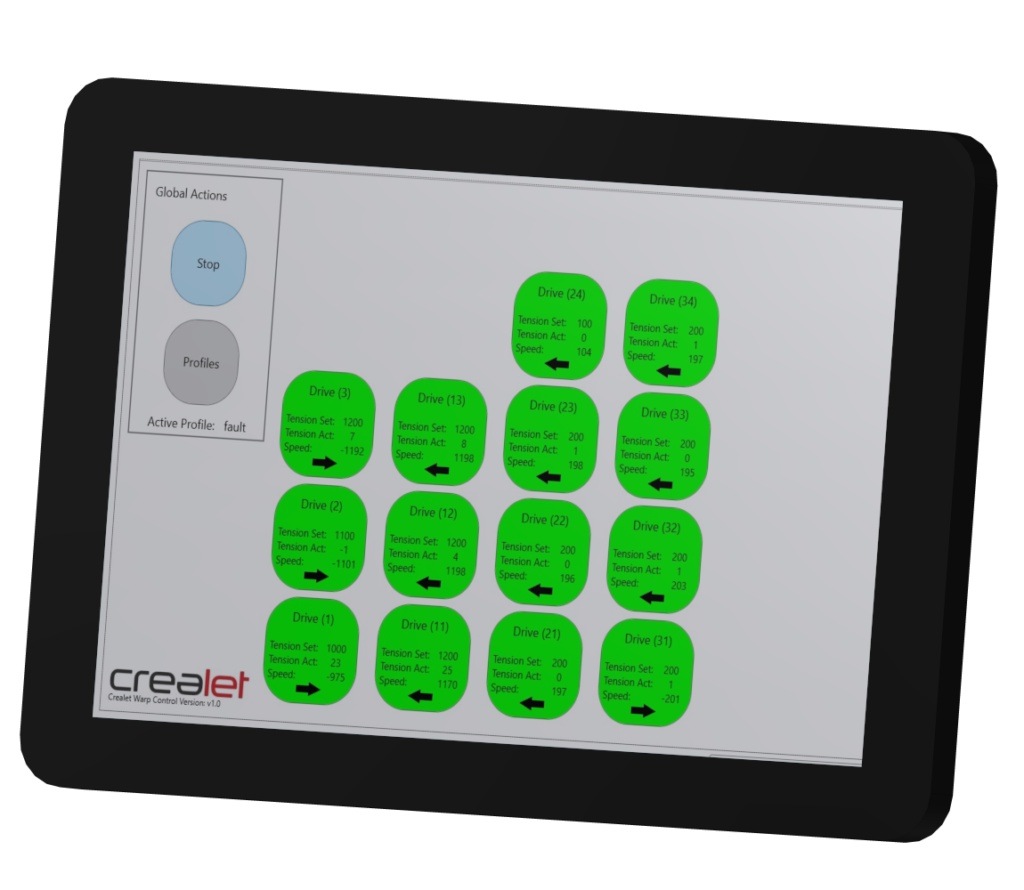
This means that information from the warp yarn feeding system is not viewed in isolation. It can be linked with additional machine and production data. This creates a more comprehensive picture of the production process – and therefore a better basis for well-founded decisions.
The foundation for future AI applications
Artificial intelligence (AI) may also play a supporting role in this field in the future.
If large volumes of high-quality process data are continuously collected, AI-based applications can, for example, help identify correlations, detect unusual process conditions at an early stage or uncover optimisation potential.
However, the prerequisite always remains the same:
Without reliable, high-quality machine data, there can be no robust digital optimisation.

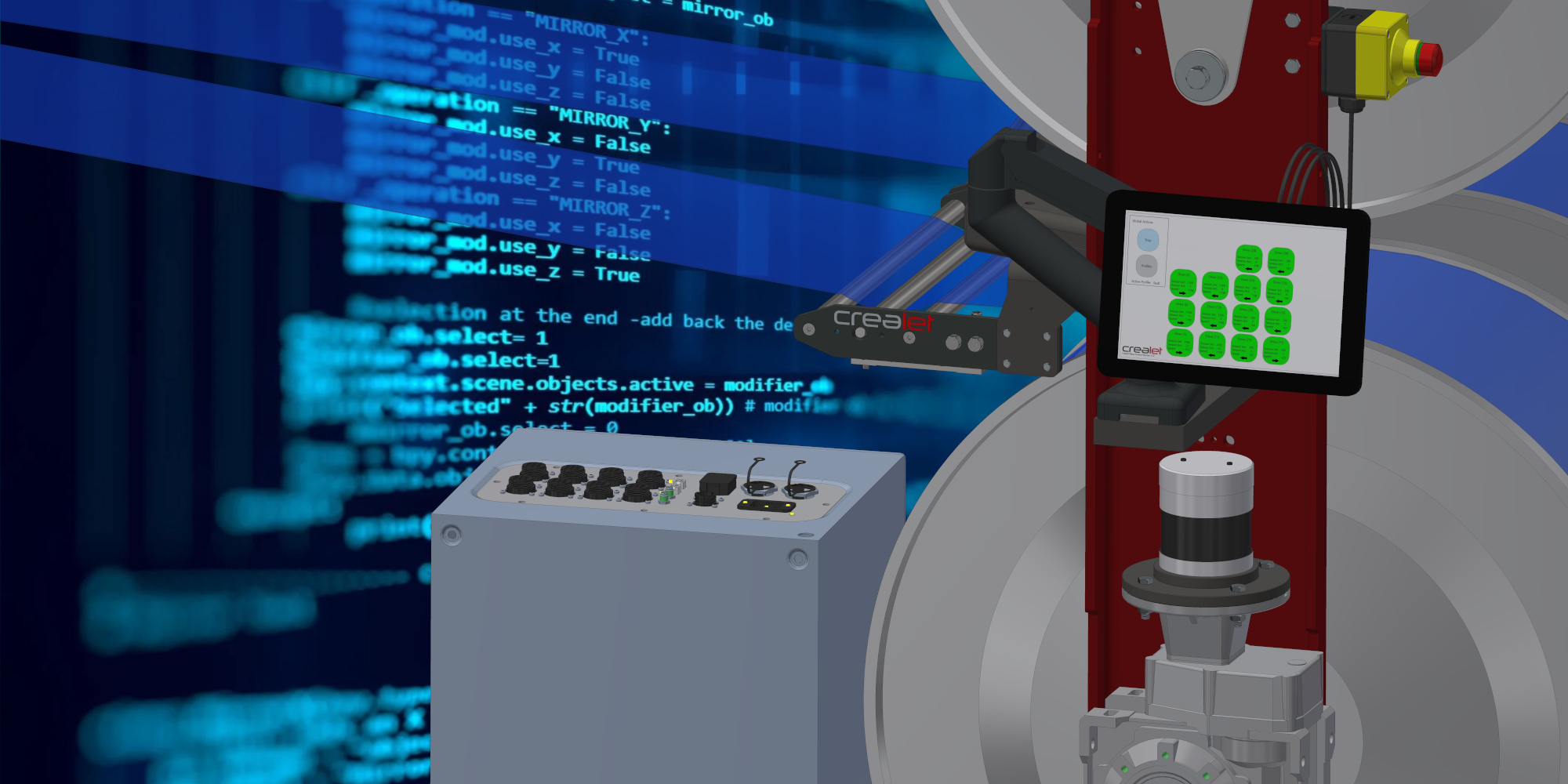
Automate. Collect data.
Understand processes. Continuously improve.
Warp yarn feeding is therefore evolving from a pure automation solution into a digitally connected component of the entire production process.
The added value therefore lies not only in the automatic control of warp yarn tension. At the same time, a transparent data foundation for quality, efficiency and continuous process improvement is created.

