
How can existing band and rope brakes be upgraded with the ECR Warp Let-Off to meet higher demands?
On many narrow fabric weaving machines, mechanical band and rope brakes have been performing reliably for decades. The basic principle is proven: braking force is generated by weights or spring force, thereby regulating warp tension.
However, as demands for quality, process reliability and reproducibility continue to increase, this principle reaches its limits. During the weaving process, the diameter of the warp beam continuously changes. What works well with a full warp beam can result in different warp tension when the beam is nearly empty.
We have solutions for this. One of them is the ECR Warp Let-Off.
Proven Mechanics Meets Intelligent Control
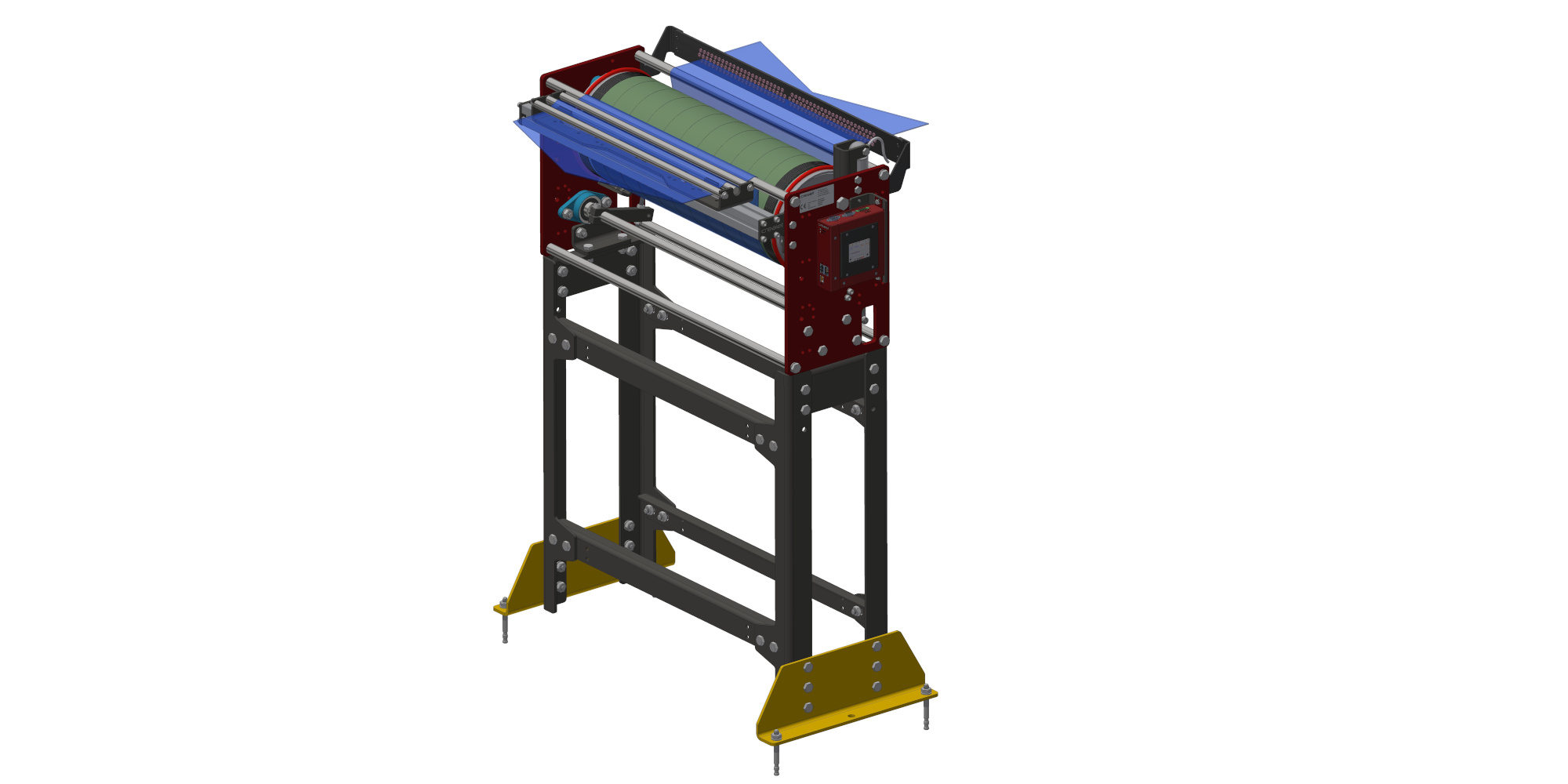
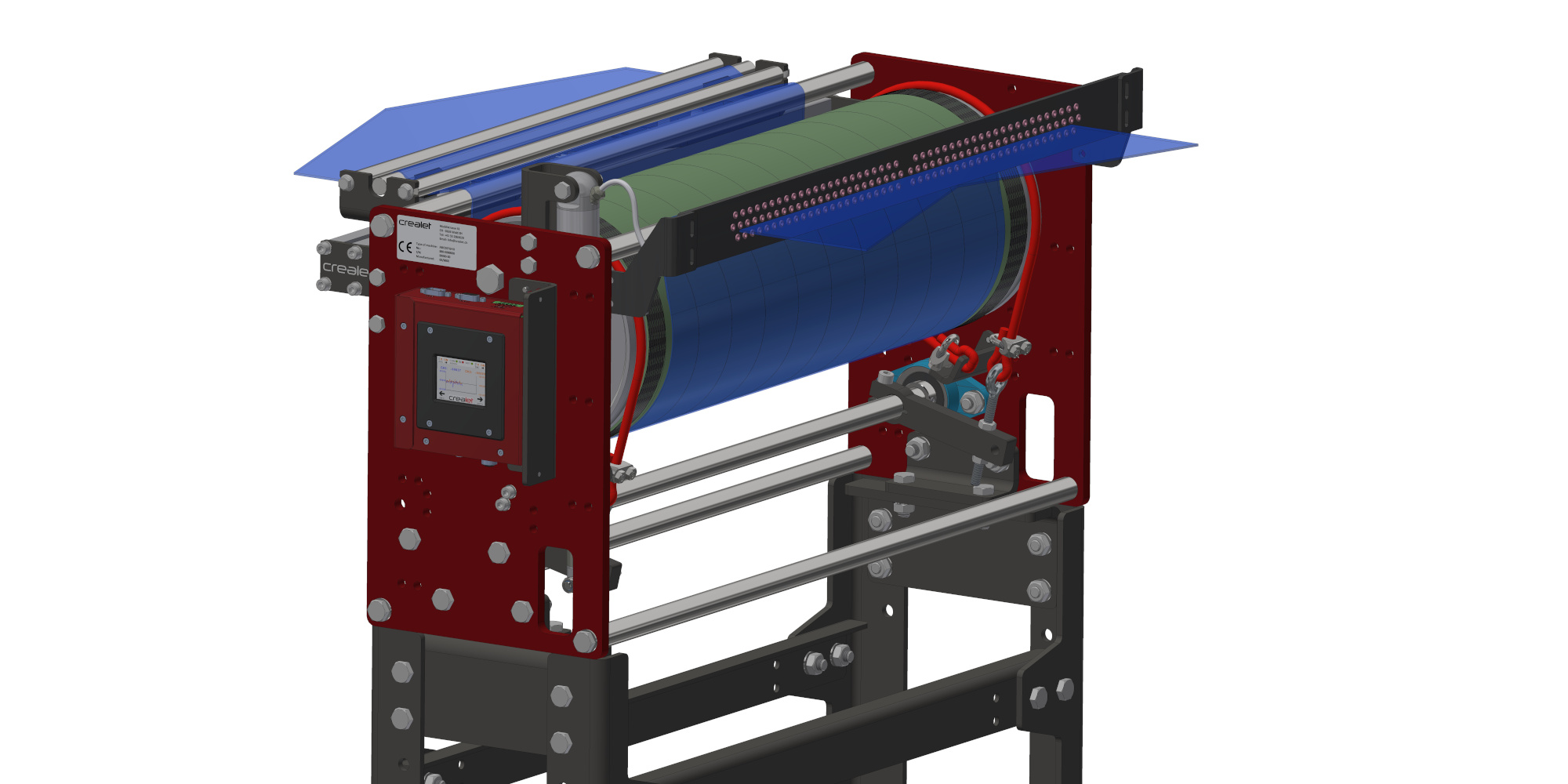
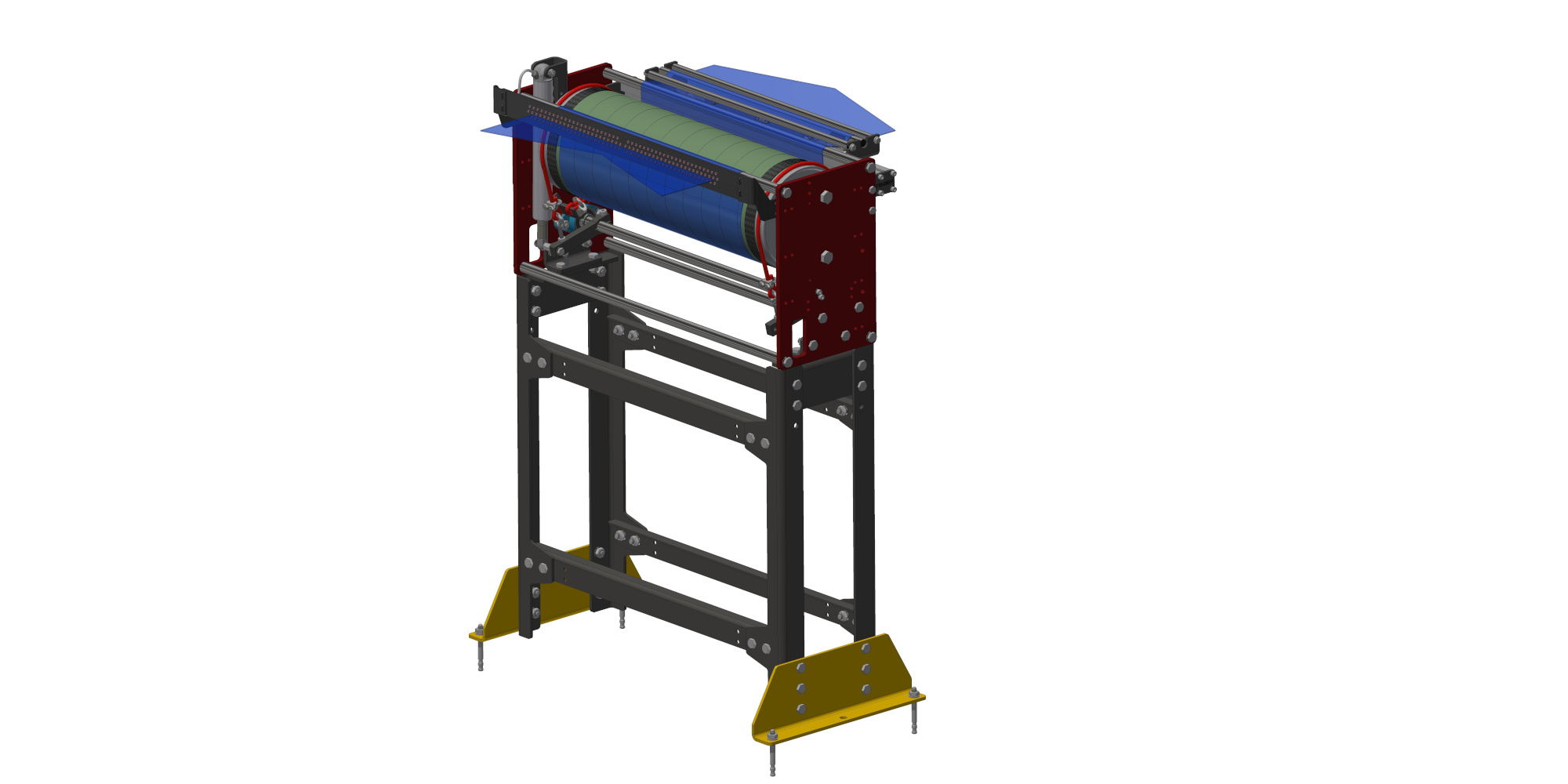
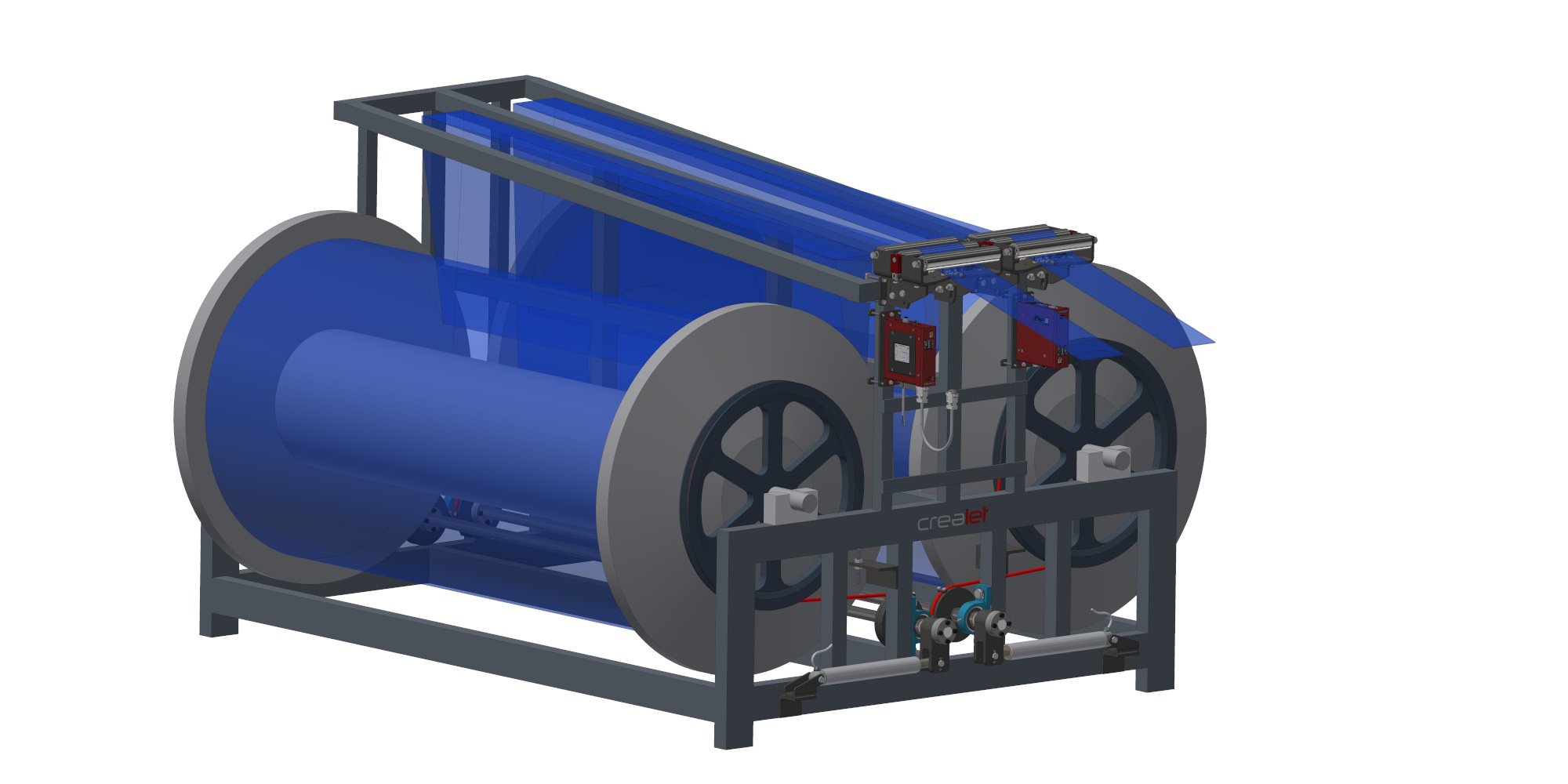
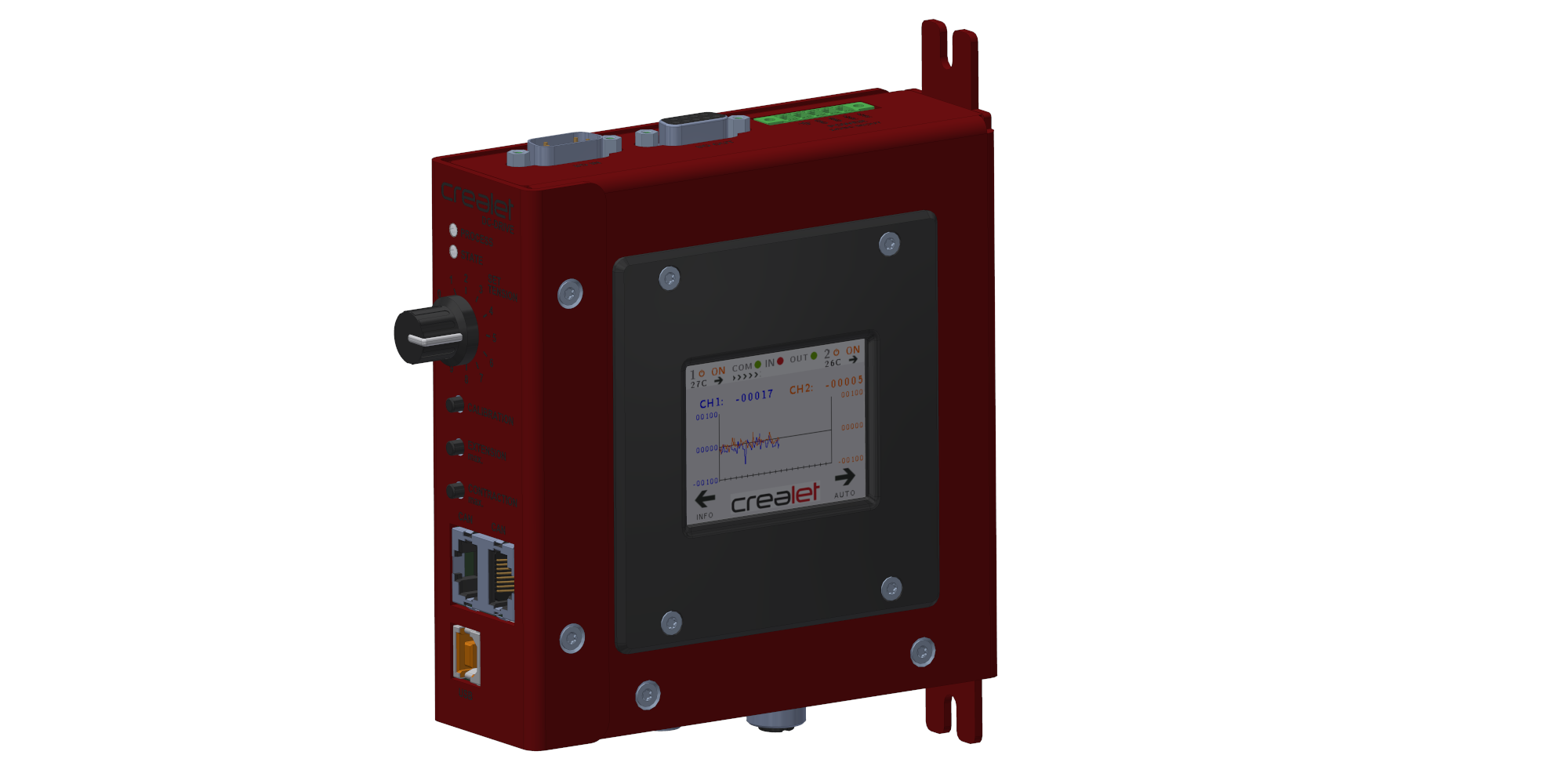
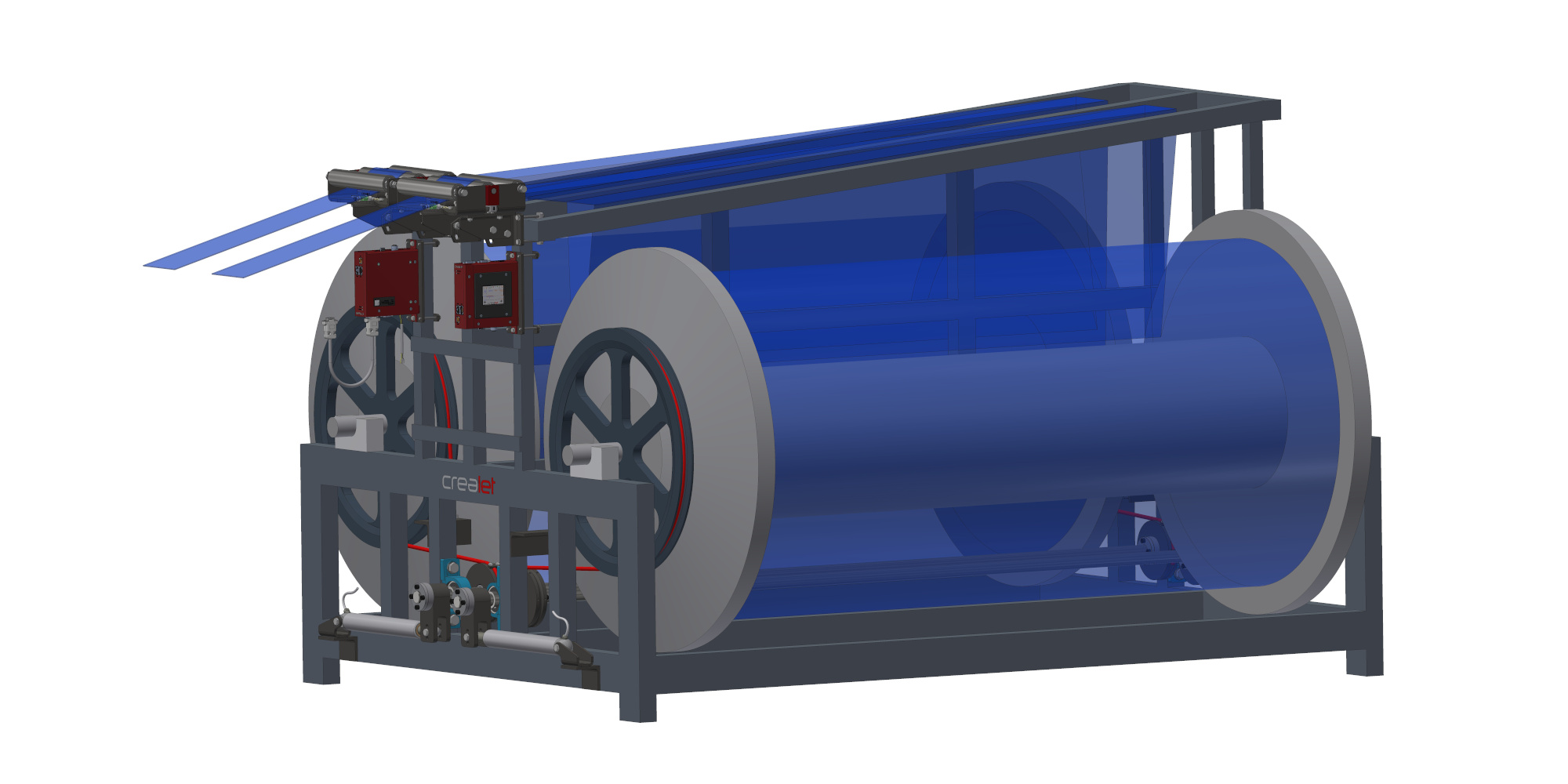
The idea behind ECR is deliberately pragmatic: an existing band or rope brake does not have to be completely replaced. Instead, it can be retrofitted with an intelligent ECR control unit.
This allows CREALET to combine the robustness of a proven mechanical solution with the capabilities of electronically controlled process regulation.
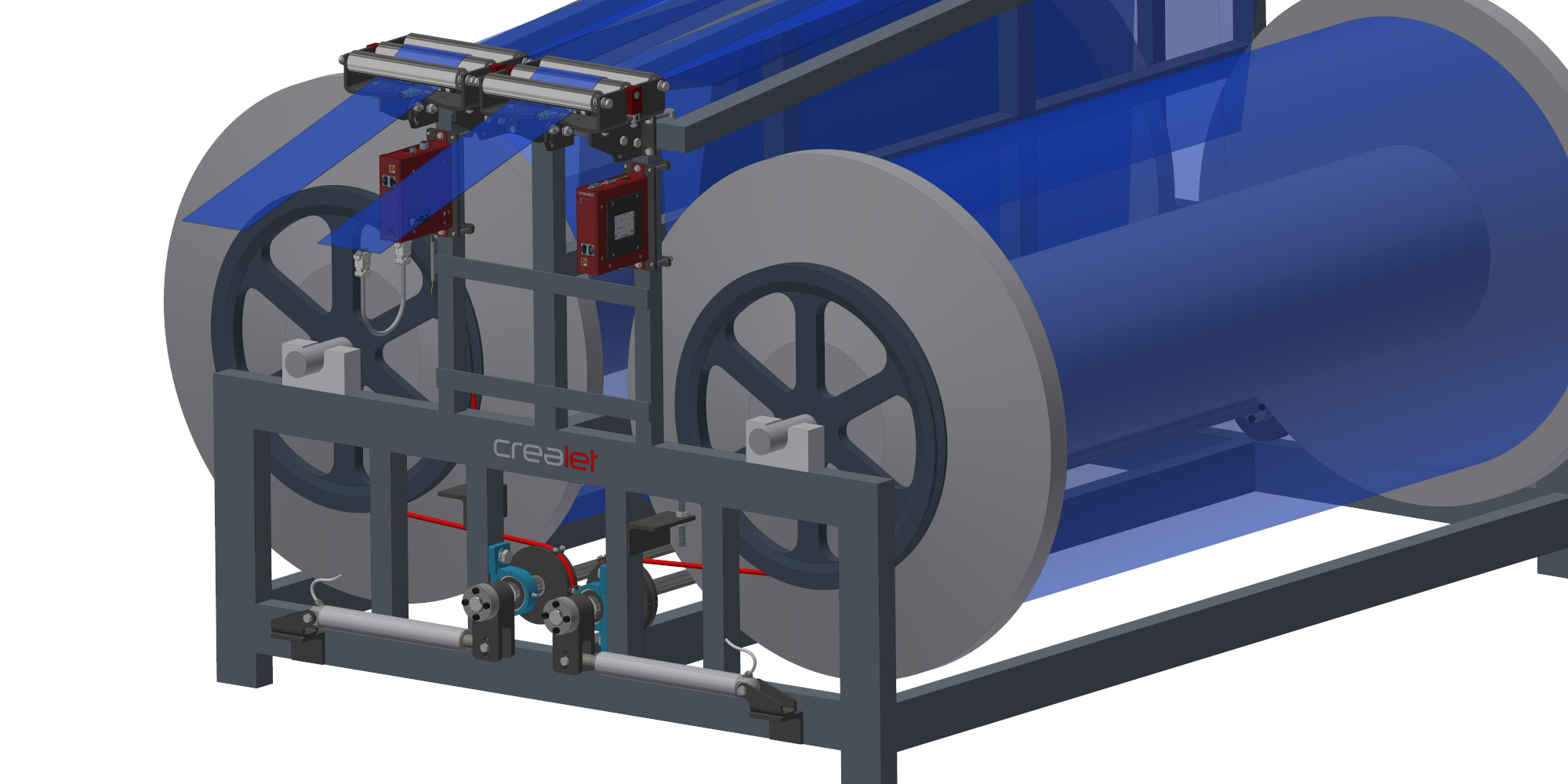
An integrated load cell continuously measures the actual warp tension. The control system processes these measurements and automatically adjusts the braking force. A cylinder regulates the brake accordingly.
The result: The desired warp tension remains constant throughout the entire weaving process – regardless of how much warp remains on the warp beam.
From Manual Adjustment to Automatic Control
With conventional systems, the changing diameter of the warp beam presents a particular challenge. As the diameter decreases, the behaviour of the system changes. Depending on the application, manual adjustments may be required to maintain constant warp tension.
This takes time and requires experience.
The ECR control system takes over this task automatically. Warp tension is continuously monitored and the braking force dynamically adjusted.
This does not just change the way the system is operated. It also makes the process itself easier to control and more reproducible.
Constant Tension Means Consistent Quality
Warp tension has a direct impact on the weaving process and therefore also on the quality of the narrow fabric produced.
Fluctuations in warp tension can, for example, affect the running behaviour of the warp threads and the uniformity of the fabric. Maintaining tension as consistently as possible, on the other hand, creates stable production conditions.
With ECR, warp tension is monitored and controlled throughout the entire process – from a full to an empty warp beam.
Warp tension can also be visualised. This gives the operator not only automatic control, but also greater transparency regarding the ongoing process.
Saving Energy Through Intelligent Braking
Another important aspect is energy efficiency.
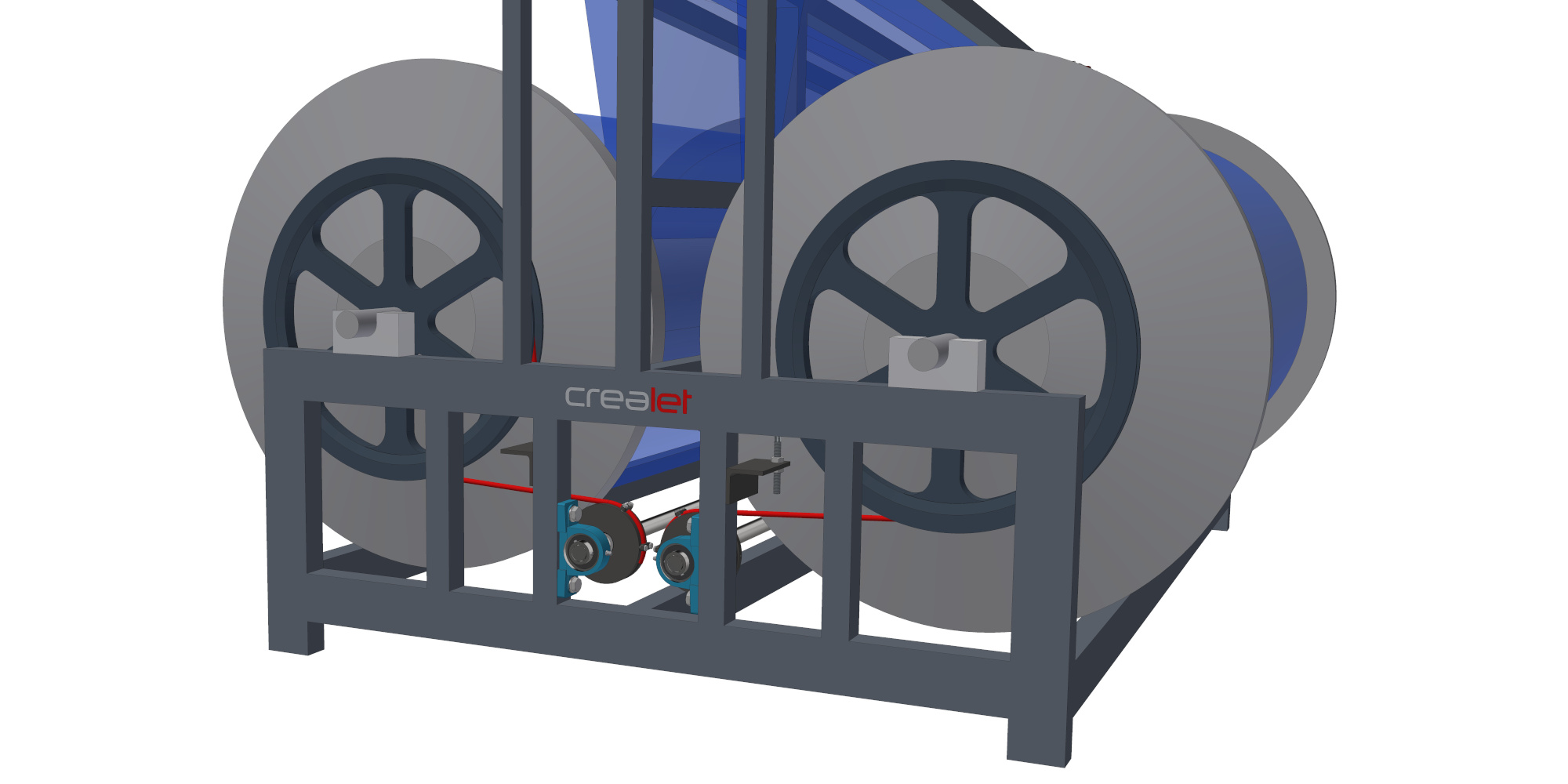
The warp beam does not necessarily have to be actively driven to maintain the desired warp tension. If the existing warp tension is sufficient to move the warp beam, it is enough to control its movement by applying the appropriate braking force.
The ECR principle makes use of exactly this approach.
Instead of consuming energy for an active drive, the existing movement of the warp beam is utilised and controlled through the brake. This eliminates the need for an additional mechanical drive.
Fewer components, lower energy consumption and precise tension control at the same time.
Modernisation with a Clear Objective
The ECR Warp Let-Off therefore represents an approach that is becoming increasingly important when modernising existing machines:
Not every proven machine needs to be replaced. In many cases, the potential lies in targeted retrofitting.
With modern sensors and intelligent control technology, existing mechanical systems can continue to be used while simultaneously being upgraded to a new level of performance.
For operators, this means:
- constant warp thread tension across the entire warp beam
- fewer manual interventions during production
- increased process reliability and reproducibility
- improved visualisation of warp tension
- more consistent production conditions
- energy-efficient operation
- customised adaptation to the machine and warp beam size
A Key Advantage:
Retrofit Instead of Replace
Especially with older but still efficient narrow fabric weaving machines, the question often arises:
Does the existing technology have to be completely replaced in order to meet modern requirements?
With the ECR Warp Let-Off, the answer is often: No.
The existing band or rope brake can continue to be used as the basis and upgraded with ECR control. This enables targeted technical modernisation without having to redesign the entire braking system.
Depending on the warp beam size and machine configuration, CREALET develops the appropriate solution.
The result is a precisely controlled system based on a mechanically proven brake – with a manageable investment and a clear focus on the actual application.
A Solution That Adapts to the Machine
No weaving machine and no application is exactly the same. That is why CREALET does not regard the ECR Warp Let-Off as a standard off-the-shelf product.
Whether retrofitting an existing band or rope brake or developing a customised braking system, the key is the correct design for the individual machine and application.
A proven mechanical brake becomes an intelligent system for maintaining constant warp tension.
And that is where the added value lies: the existing technology is retained, while process control takes a decisive step towards greater automation, precision and energy efficiency.
Interested in a Retrofit?
Would you like to find out whether your existing band or rope brake can be modernised with ECR control?
CREALET analyses your application and develops the right solution – from retrofitting existing systems to the customised design of complete braking systems. Talk to us about your application.

